
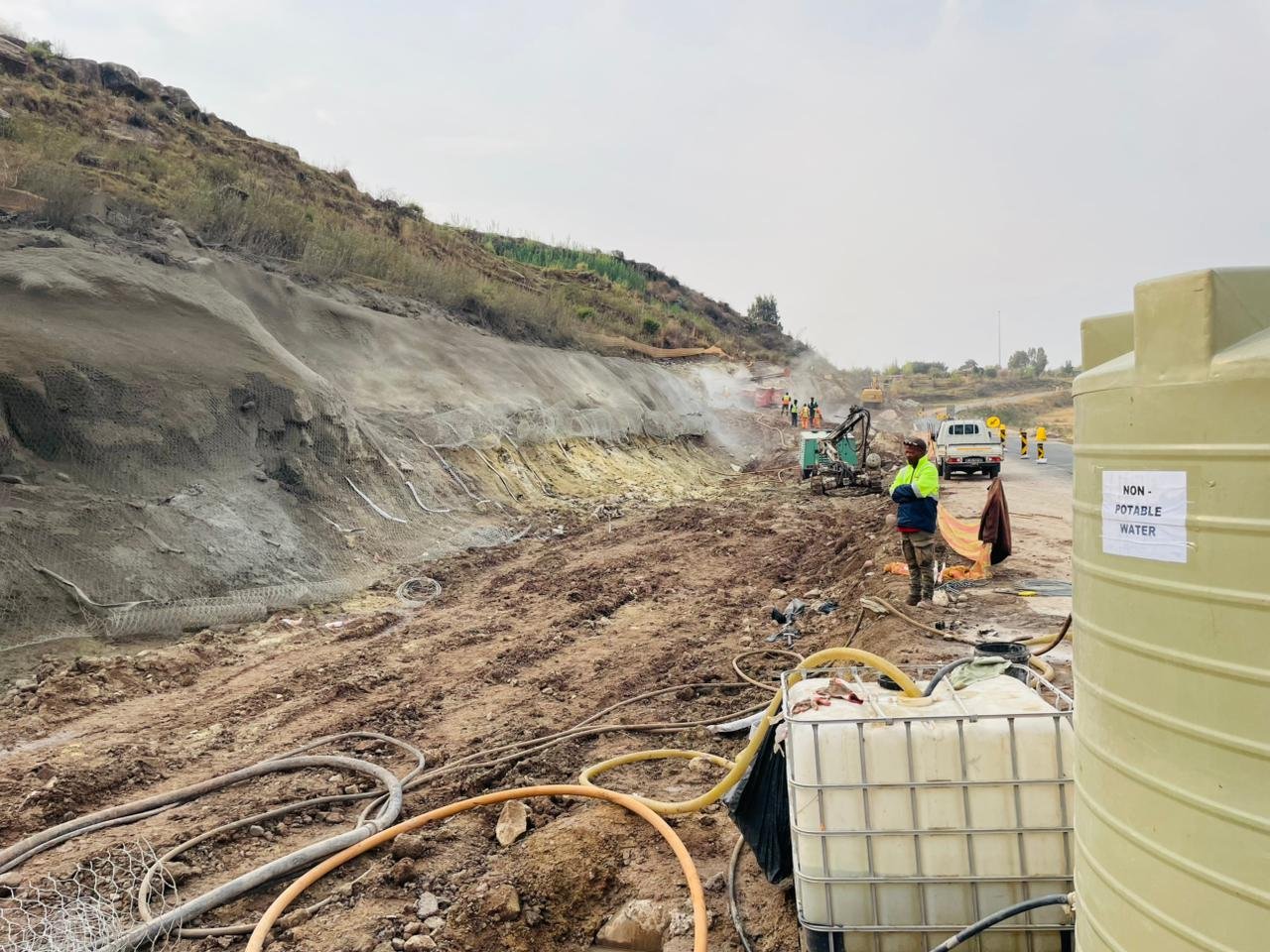
Slope Stabilisation
Constructing on sloped terrain requires careful consideration of site conditions, as the risk of slope failure can lead to significant project delays and unexpected costs for contractors. Slope stability is influenced by a variety of factors, all of which must be properly assessed before work begins.
One of the most critical factors is soil type. Cohesive soils, which bind together more effectively, generally maintain their shape better than loose, granular materials. Subsurface conditions also play a major role—fault lines or unstable rock formations can substantially increase the likelihood of slope instability. Vegetation cover further contributes to stability by reinforcing the soil structure through root systems.
For these reasons, contractors often rely on slope stabilization techniques to ensure safe and reliable ground conditions. In many cases, these methods are complemented by chemical modification or soil stabilization to enhance the properties of the existing soil. Improving in-situ materials can significantly reduce the need to remove unsuitable soil and import new, compactable materials, resulting in considerable cost savings.
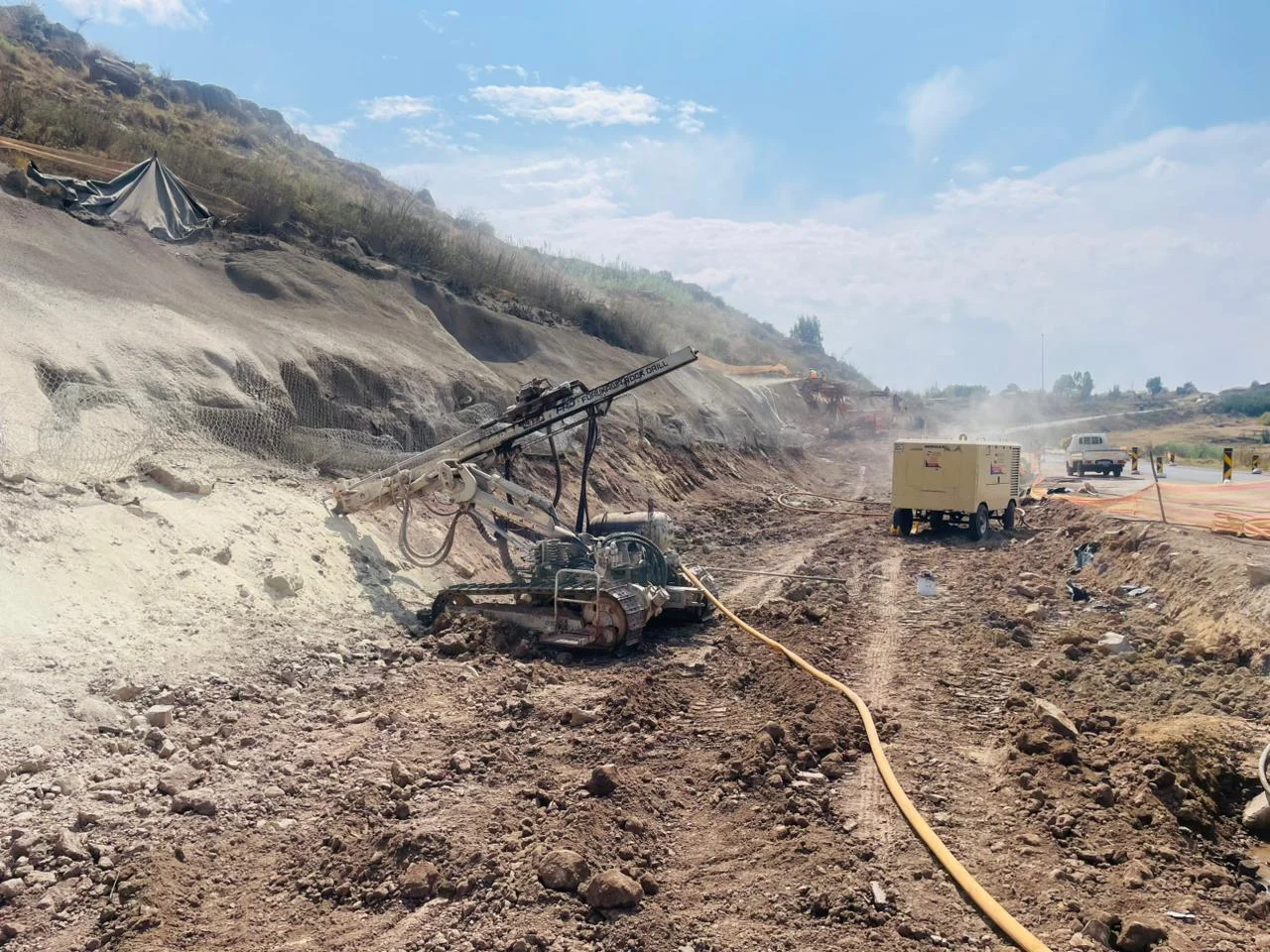
Understanding the Process of Slope Stabilization
Slope stabilization techniques are used whenever builders must prevent soil movement during construction or long after a project is completed. Without proper stabilization, slope failures can damage the site, compromise structures, and create unsafe conditions for workers and the public—sometimes years later. Generally, contractors and developers rely on four primary hillside stabilization methods:
• Installing drains:
• Terracing:
• Building retaining walls:
• Covering slopes with mesh:
In many situations, the most effective approach is to combine several of these techniques. When the existing slope material is unsuitable, chemical modification or soil stabilization can be used to bring the soil to optimum moisture and improve its compaction characteristics—enhancing the performance of all stabilization methods.
The Importance of Slope Stabilization
Stabilizing slopes is critical for a number of reasons. First and foremost, builders need to be sure that the ground they are building upon will be the best possible foundation for the finished structure. If there’s a chance that the ground underneath a roadway or building may shift or sink after the work is finished, it could lead to some extremely costly repairs or even complete structural failure.
There’s also the safety angle to consider, as shifting soils could cause heavy construction machinery to slide or fall. This poses a severe risk to workers as well as to the project. From an ecological perspective, protecting slopes helps preserve ecosystems. Erosion and runoff caused by construction activity can harm wildlife habitats and pollute local waterways. For all these reasons and more, it’s essential for contractors to pay close attention to slope stabilization as they work in potentially sensitive areas.
Trust Rock Solid Stabilization & Reclamation
For all methods it’s important to work with soils that are suitable to reach compaction to maintain the structural integrity of the engineered design. Soil Stabilization can help improve the workability of the soil to ensure whichever method is chosen to stabilize your project’s slope it will be successful.
As a leading specialty contractor focusing on soil modification, Rock Solid is your premier partner for all your slope stabilization needs. We bring the expertise and capabilities necessary to prevent slope failures and keep your project on track.
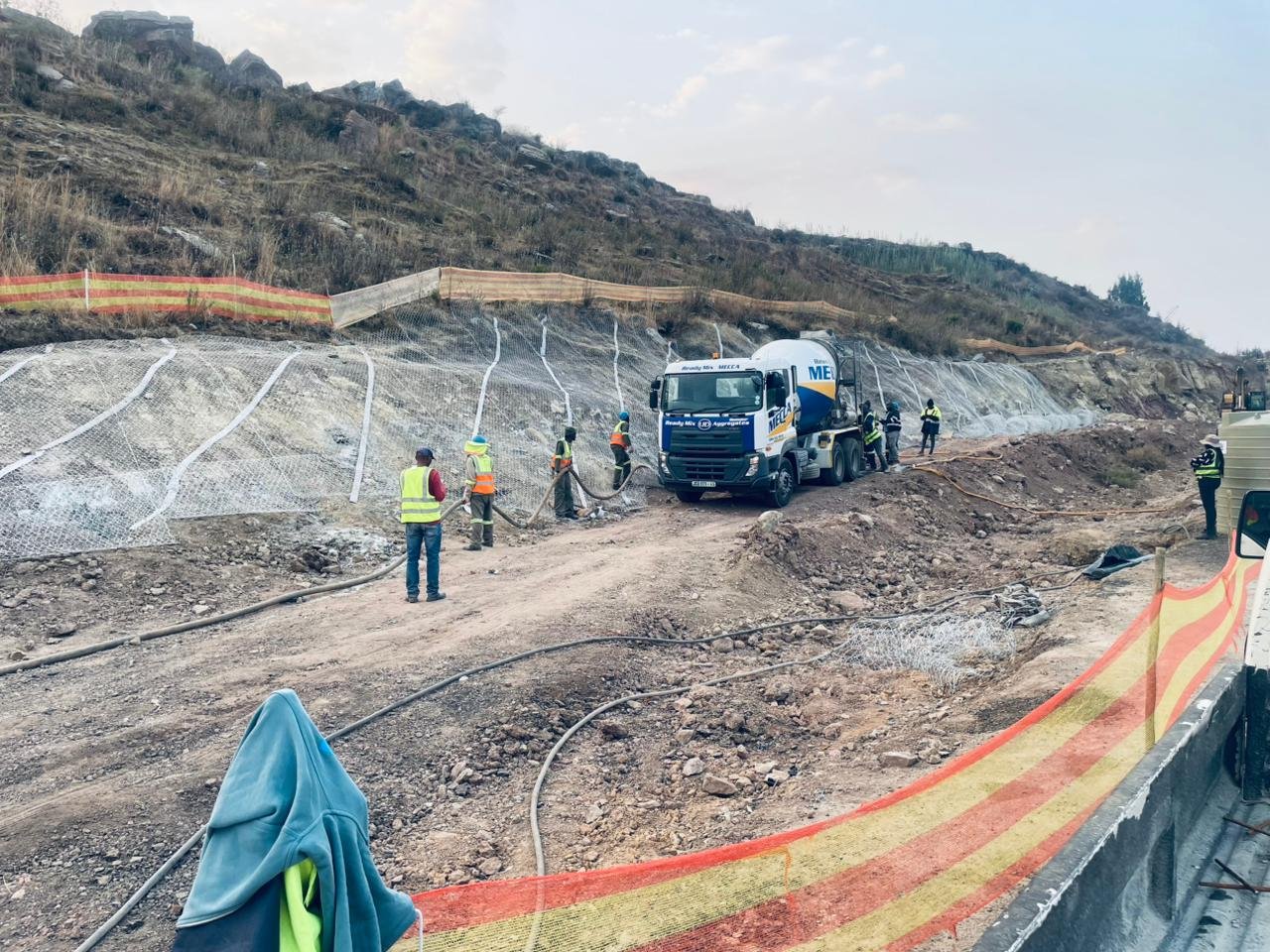
Methods of Slope Stabilization:
Soil Nailing:
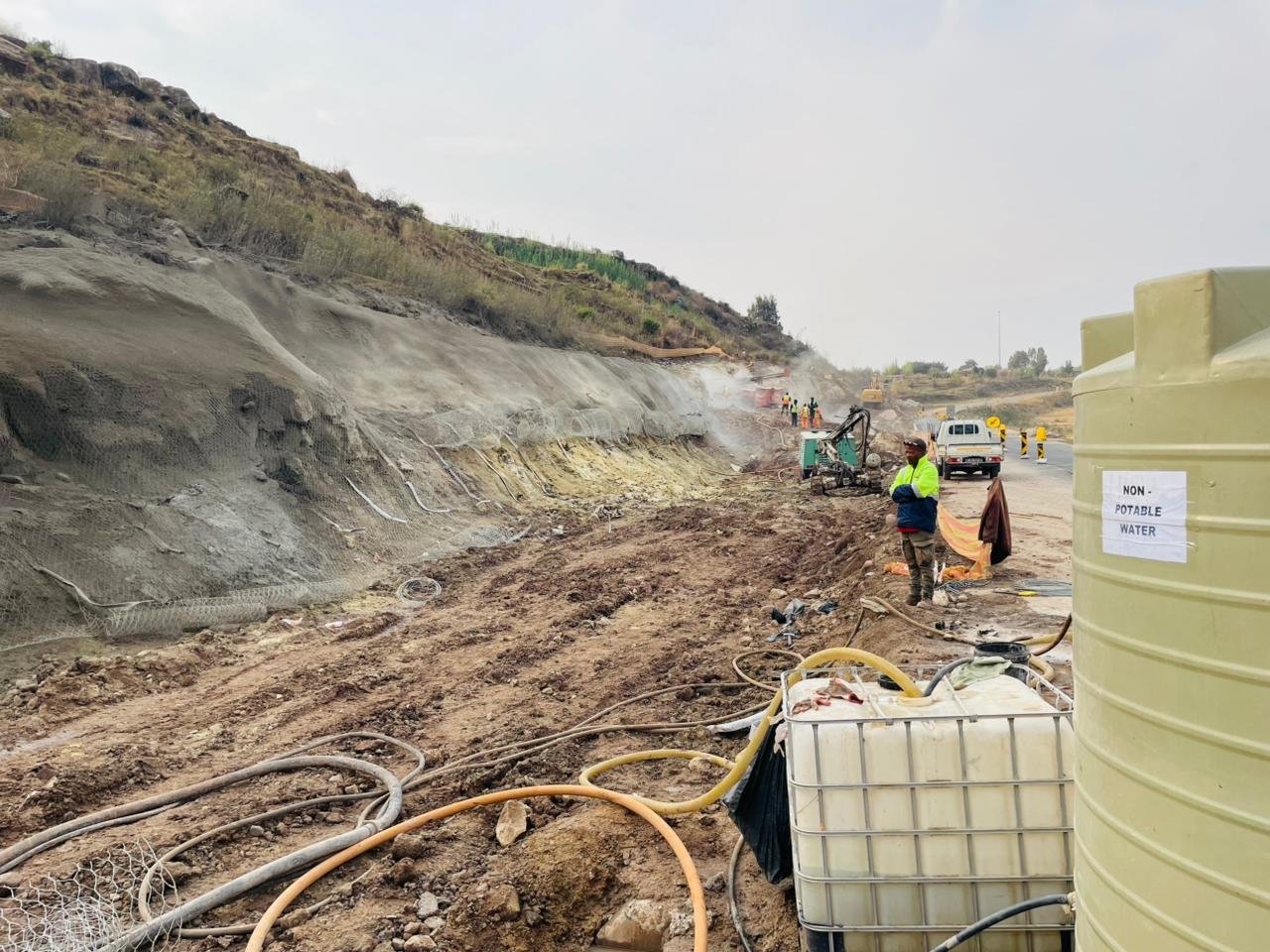
Soil nailing is a geotechnical technique that reinforces and stabilizes slopes, excavations, and retaining walls by installing closely spaced steel bars (“nails”) into the ground. The nails are then grouted, and the soil surface is often covered with shotcrete and wire mesh, creating a composite, gravity-retaining structure that prevents soil erosion and landslides. This method is cost-effective and is used for both new construction and for repairing existing unstable slopes.
How it works:
• Installation: A section of the slope is excavated or trimmed, and the first layer of shotcrete is applied.
• Drilling: Holes are drilled into the soil according to a designed pattern, with a specific spacing and inclination.
• Nail insertion: Steel bars, or “nails,” are inserted into the drilled holes.
• Grouting: The holes are grouted to provide additional support and bond the nails to the soil.
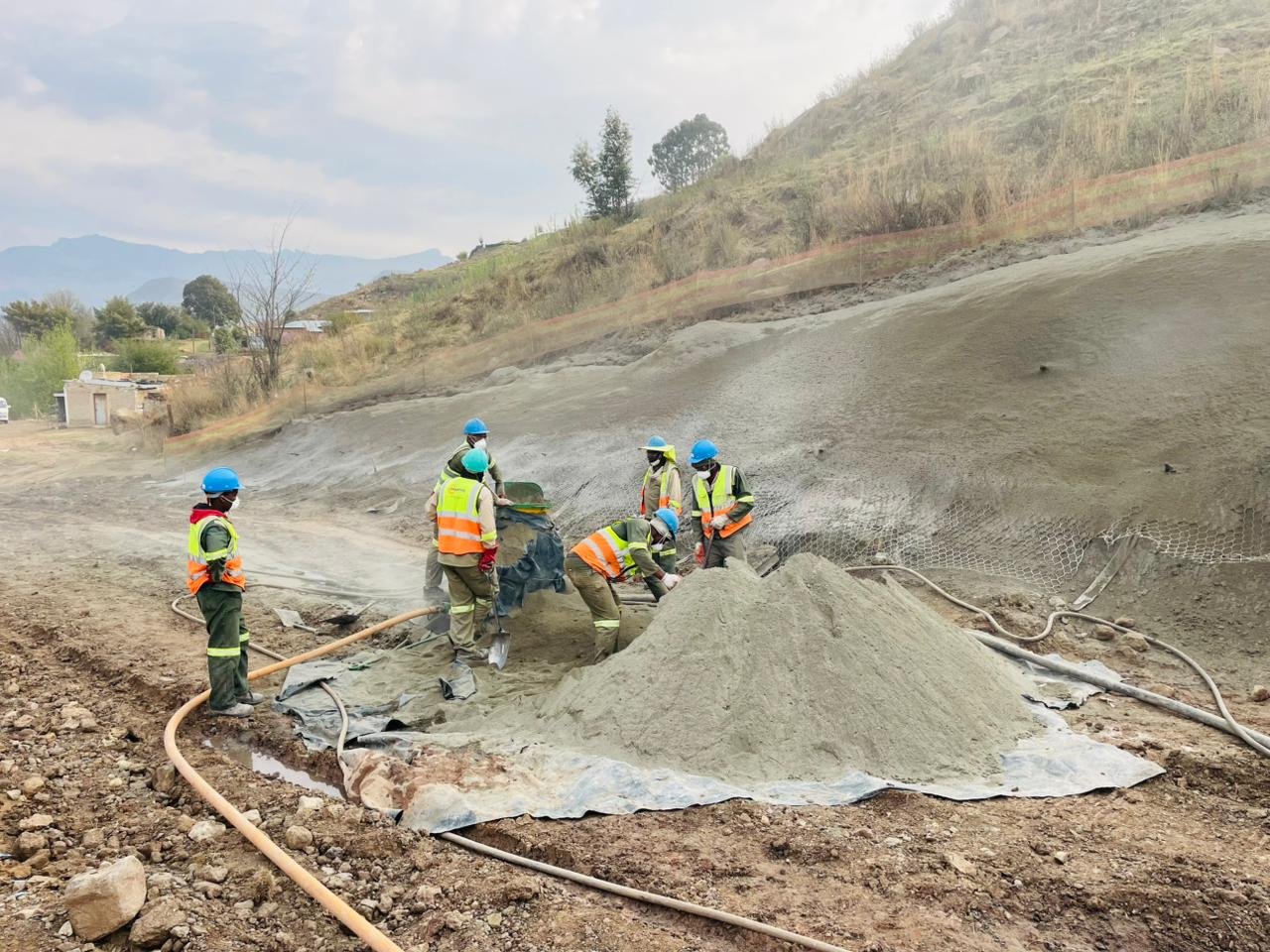
• Surface finishing: A wire mesh is placed over the soil, and a final layer of shotcrete is applied to protect the surface.
Key Applications:
• Slope stabilization: Prevents landslides and erosion on natural or man-made slopes.
• Excavation support: Allows for the creation of steep, stable excavations without extensive shoring.
• Retaining walls: Creates a stable, in-situ retaining wall system.
• Infrastructure projects: Secures unstable slopes along roadways, railways, and other infrastructure.
Advantages:
• Cost-effective: Often a cheaper solution than other retaining methods.
• Efficient: A faster process compared to traditional methods.
• Versatile: Used for new construction and remedial work on existing structures.
• Durable: The grouted steel nails provide long-term stability.
Disadvantages:
• Existing utilities: Underground pipes and cables can restrict nail placement.
• Groundwater: Not suitable for areas with high groundwater seepage because it requires a temporary unsupported excavation face.